


 25 / 72

is translates to an annual increase of 4.4% and changes the annual full-time tuition
from $4,570 to $4,770. Despite significant efforts to limit expenditures, the tuition
increase is necessary in order to provide a structurally balanced budget where there is
sufficient recurring revenue to meet recurring expenses. in order to minimize the
impact of the tuition increase, the Board also authorized a transfer of $3,979,816
million from the College fund Balance reserve for 2016-2017. with these actions,
the student share of revenue support will stand at 50.1%, the State share will now be
26.4% and the County share will be 23.5%.
working with the Board of Trustees and the leadership from our collective bargaining
units, my administration continues to advocate for the implementation of a multiyear
plan for sustainable sponsor contributions. Such a plan would meet the objective of
keeping tuition affordable and enabling students and their parents the ability to plan
ahead for the cost of tuition. in response to this mutual concern, which we share with
our sponsor, Suffolk County resolution No. 920-2015 established an advisory
Community College Budget Committee to develop a sustainable plan. e resolution
establishing this committee calls for the group to submit an advisory plan to the
County executive within 180 days by meeting at least once per month until the
report is complete. is joint committee is comprised of members from our Board,
administrators from the College, and representation from the County Legislature and
the County executive’s office. Duwayne Gregory, Presiding officer of the Suffolk
County Legislature, convened the original meeting. Terry Pearsall was then nominated
to serve as Chair of the committee.
Since that time, the College has provided information to the committee on its student
demographics, economic impact, efficiencies that have been implemented to its
operation, details regarding its budget gap for the upcoming year and expenditure and
revenue projections over the next five years. During the course of these meetings,
we have shared a historical review of tuition, State aid support, our gap analysis,
identification of our cost containment measures and quantification of our efficiency
efforts. e Legislature’s Director of Budget review has developed a model to assist
committee members in understanding how the different revenue and expenditure
factors (enrollment, State aid, County support, tuition and the use of reserves) impact
the College budget. e committee has met multiple times and will continue to meet.
Capital Projects Update
i believe the quality and maintenance of our teaching and learning environment
are important to student success. By investing in new buildings and renovating our
existing infrastructure, we are able to maintain a setting where faculty can comfortably
engage our students. with tens of thousands of students using our facilities every day,
we must advocate for new spaces and be diligent in our maintenance and upkeep in
order to provide a conducive environment where learning can occur.
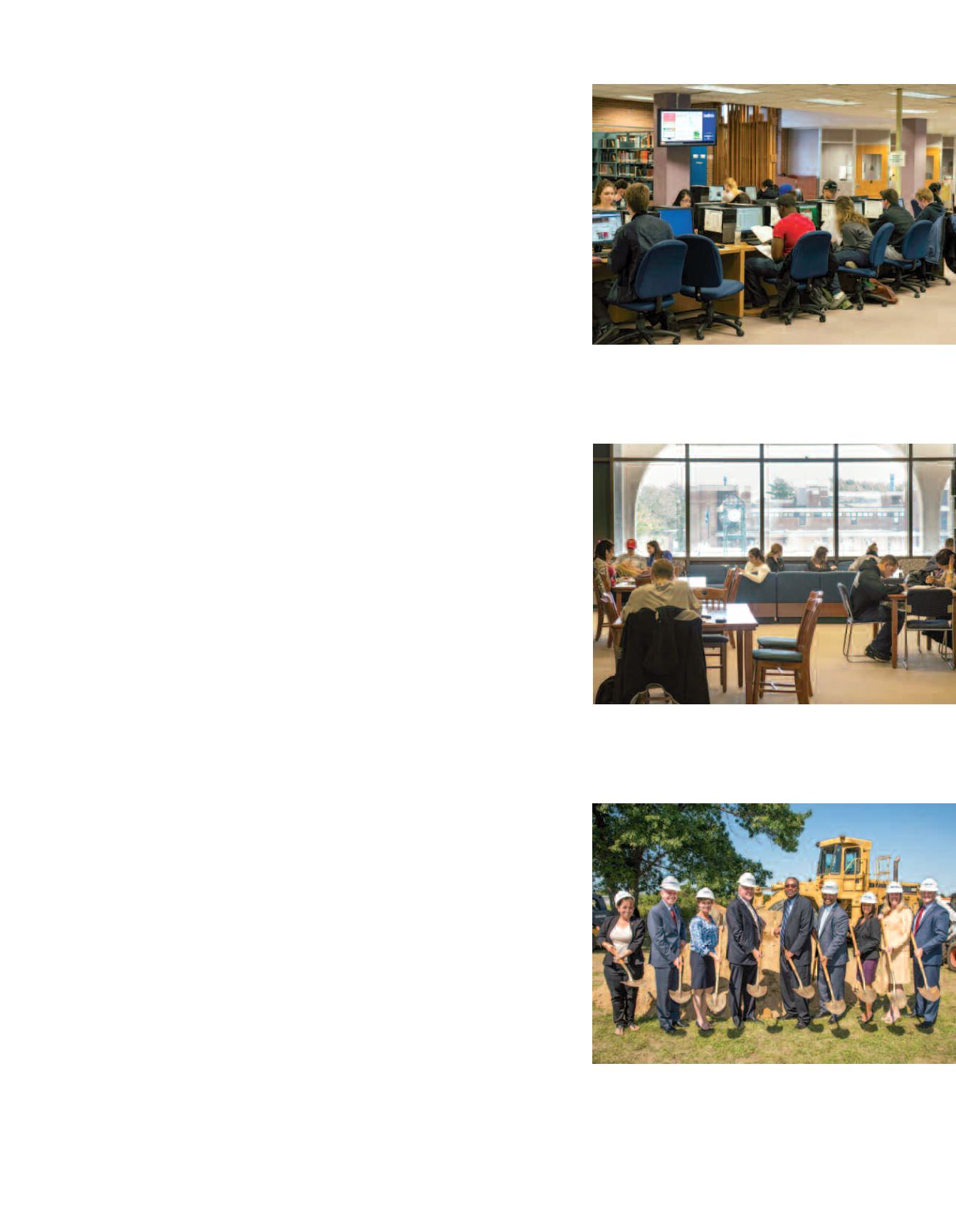
Last September, we hosted groundbreaking ceremonies marking the next two new
facilities that will be opening on our campuses: the renewable energy STeM Center
on our Michael J. Grant Campus, and the Health and wellness Center on the
eastern Campus. At both events, we were joined by many special guests, including
representation from the construction trades and area community leaders. Board Chair
eresa Sanders and i delivered opening remarks for the renewable energy STeM
Center, summarizing the eventual features and programs that will operate within the
building upon its completion and thanking everyone who played a role in ensuring
funding for this building was received. e audience warmly greeted our student
speaker, who shared the importance of “starting at Suffolk” as part of her journey as
2015-2016 Review of Accomplishments
❘
24
e College’s Renewable Energy STEM Center will be located
on the Michael J. Grant Campus.
e College faces increasing costs to address expectations for
enhanced services through technology.