


 50 / 72

i would like to update you regarding our energy performance contract with our
partner Cenergistic. e team from Cenergistic recently updated us on progress to
date associated with our behavior-based energy management plan. Although much
works remains to be done, the College’s two energy specialists, Carol Malley and
ryan Mcenany, have been implementing our efforts, working collaboratively with
staff in our Central facilities and Plant operations departments to optimize systems
and maximize savings. Since August 2014, we have realized the following savings:
• 2,269,345 kwh of electricity
• 187,624 therms of natural gas
• 15,672 kgals of water
• 18,150 gallons of #2 heating oil
• ese savings equate to:
• Preventing 1,729 metric tons of Co 2
• removing 360 automobiles for an entire year
• Planting 44,371 tree seedlings for 10 years
we have also successfully installed 21 water bottle refilling stations across the three
campuses; this effort has helped eliminate over 160,000 plastic bottles from entering
local landfills. within the parameters of the contract, College staff will work closely
with Cenergistic’s engineers and consultants to analyze and monitor energy use in
classrooms, offices, athletic facilities, and other areas of the College to ensure energy is
being used efficiently.
A task group has been convened to solicit input on sustainability workforce
educational needs and industry trends. Several program outlines and curriculum
models have been obtained from similar institutions currently offering academic
programs in disciplines such as energy Management, and renewable energy
Technology. Subcommittees have been established, and a white paper has been
drafted outlining potential curriculum models for implementation with our planned
renewable energy STeM Center.
Under my direction, several grant applications (Green roofs, energy to Lead
Competition, Aquatic Pollution Prevention) were developed with an eye toward seeing
grant activities evolve into more enduring coursework models. As an example, the
College had previously been awarded two small implementation grants to modify
activities taking place in selected science courses. Science education for New Civic
engagements and responsibilities (SeNCer) courses and programs strengthen student
learning and interest in the sciences, technology, engineering, and mathematics by
connecting course topics to issues of critical local, national, and global importance.
Dr. Monica Devanas, Director of faculty Development & Assessment Programs at
rutgers University presented a session illustrating how to align our curriculum with
ideas, exploring the positive effects of these “connections” on student learning. is
activity highlighted the promising overlap of operational sustainability initiatives and
classroom instruction, and we saw strong faculty attendance and interest.
when New York Governor Andrew Cuomo announced the 2015 regional economic
Development Council (reDC) awards in December, the College received $203,708
from the environmental facilities Corporation for a Green innovation Grant
Program (GiGP) proposal to convert three traditional roofs (one on each campus)
into green and sustainable roofs. e three buildings receiving the green roofs are:
william J. Lindsay Life Sciences Building (Ammerman), the Peconic Building
(eastern), and the new Learning resource Center currently under construction on
the Michael J. Grant Campus.
49
❘
2015-2016 Review of Accomplishments
rough an energy performance contract, we are optimizing our
energy use and maximizing our energy savings.
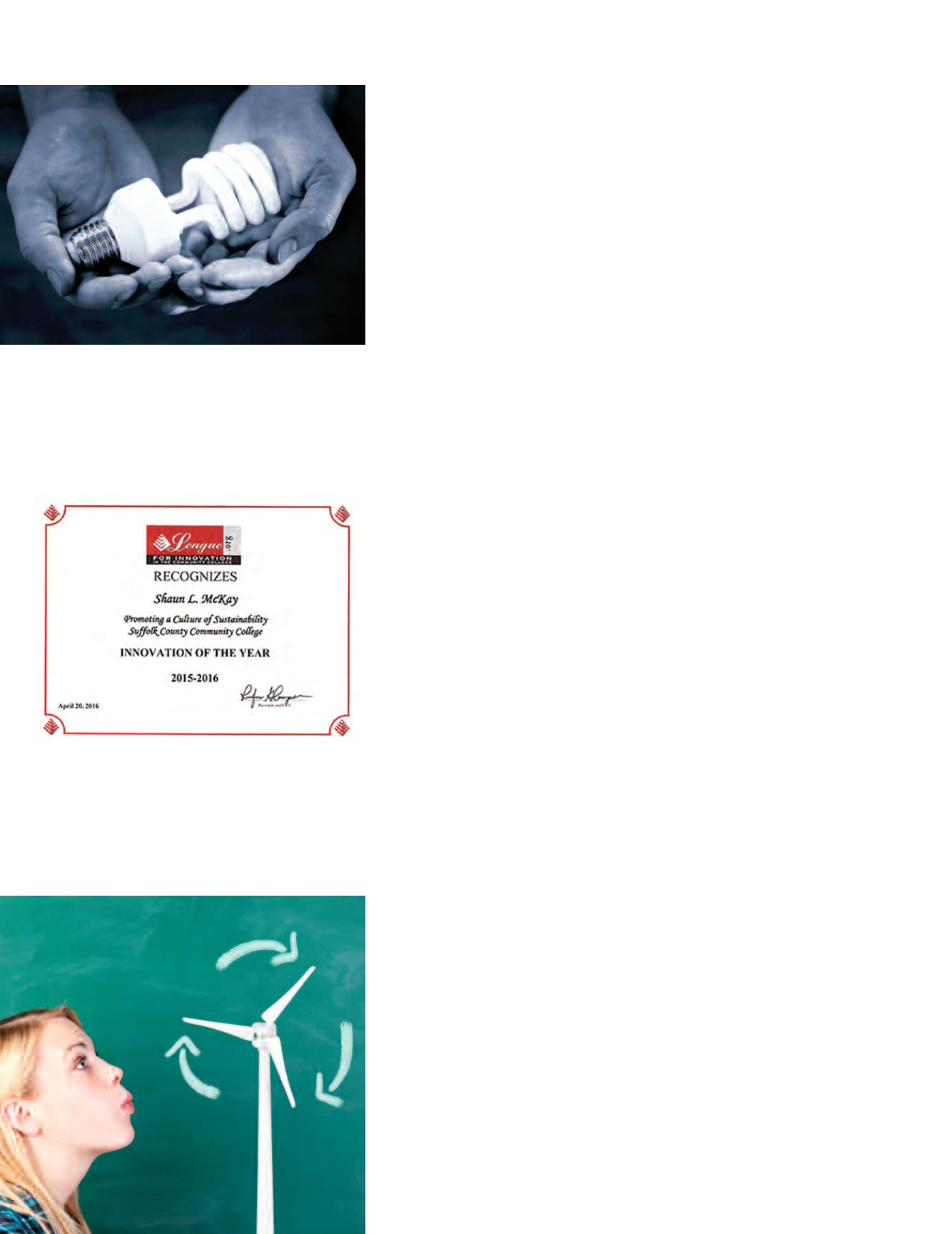
I was honored to be recognized for my work in promoting a
culture of sustainability at the College.