


 48 / 72

are endowed with significant resources by the NSf to concentrate on particular areas
of technical workforce development and serve as flagship programs that address key
regional and national needs in strategic STeM workforce fields. Planning for the
development of an ATe regional Center proposal to the NSf was initiated this year.
e National institutes of Health is continuing to sponsor two long-term projects at
the College: BioPreP and irACDA. ese two programs work in concert with the
College’s NSf-sponsored S-STeM program to provide authentic research experiences
and significant support to the College’s community of STeM students and faculty.
each year through these programs, Suffolk students travel to research universities and
national laboratories across the country to participate in research. e irACDA
program, entitled Consortia for the Advancement of Postdoctoral Scholars (CAPS),
will provide the College with approximately $140,000 over the life of the project to
mentor postdoctoral students in undergraduate classroom teaching.
e College received support from the National endowment for the Humanities
(NeH) to develop and present an innovative program on the Michael J. Grant Campus
entitled Latino Americans: 500 Years of History. is program supported a series of
public film documentary screenings and panel discussions about Latino history.
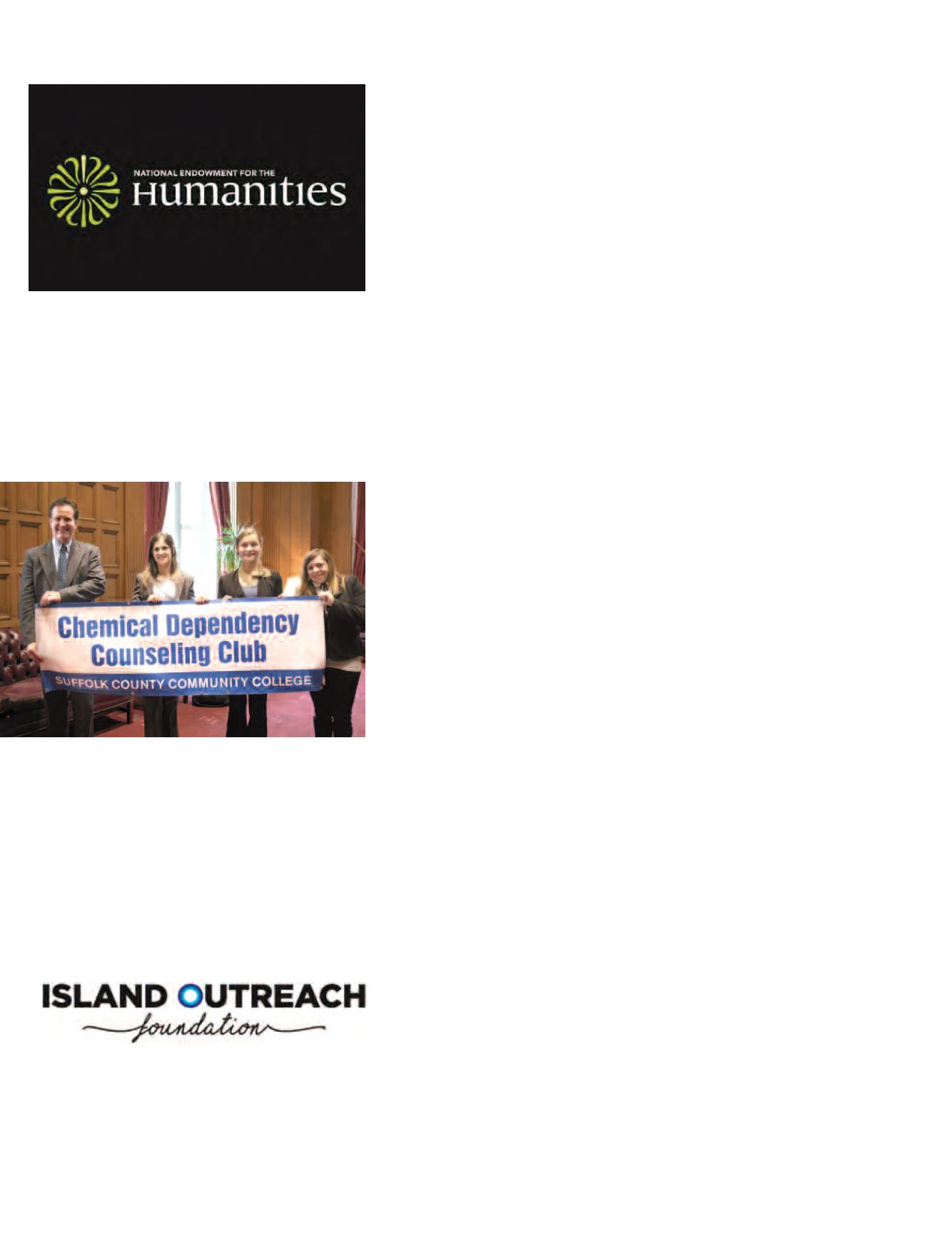
A federal Health Services resources Agency (HrSA) multiyear award continues to
support the Chemical Dependency Counseling (CDC) program on the Michael J.
Grant Campus. e grant provides several hundred thousand dollars in direct
financial support to students in the program each year and has already resulted in
enrollment growth from 70 to more than 120 students. e purpose of the funding
is to increase the number of licensed chemical dependency counselors at work in the
community in order to address the growing drug abuse epidemic among young people
on Long island.
e College’s federally funded, New York State education Department (NYSeD)
administered Perkins Career and Technical education Act (CTeA) program continued
this year with five Major efforts. ese efforts are required to target career and
technical majors with resources to improve specific outcome measures, including
technical skills attainment, retention rates, completion rates, and non-traditional (for
gender) student participation and completion rates. Major efforts completed during
the reporting year supplied: 1) equipment and supplies to digital-animation courses
on the eastern Campus, 2) materials and support for the instructional cost of non-
credit advanced manufacturing and non-credit ophthalmic assistant/technician
training through the Corporate Training Center and the office of Continuing
education, and 3) equipment and supplies for the Architectural Technology and
Construction Technology programs on the Ammerman Campus. e program
supported targeted efforts by faculty to attract underrepresented non-traditional
genders to career and technical majors, including outreach to high school and
undergraduate women by Architectural Technology and Construction Technology
women faculty, as well as outreach by the Career Services offices on all three
campuses through the Job Search Success program.
other programs around the College benefitted from sponsorships, including:
• e Li outreach foundation provided $50,000 in funds to support student veterans.
• e entrepreneurial Assistance Center on the Michael J. Grant campus received
a small ($3,000) award from the New York Department of State to present
workshops to assist immigrants in starting small businesses and a larger ($42,000)
47
❘
2015-2016 Review of Accomplishments
Grant funding will enable the College to increase the number of licensed
chemical dependency counselors at work in the community.